
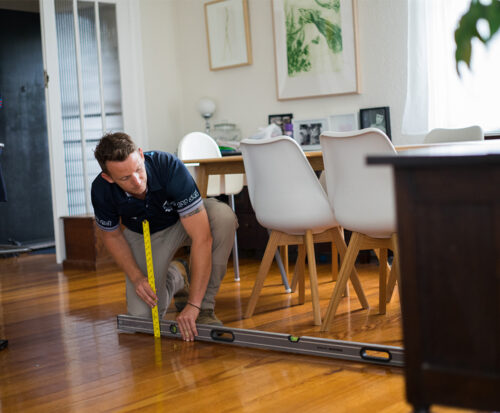
Many people will tell you that you should always have a building inspection completed before purchasing a home, but what exactly does that entail? There is often a bit of mystery about exactly what building inspectors do/ look for/ document during a home inspection—so let’s break it down for you.
How long will the home inspection take?
We always allow 2-2.5 hours, though some inspections take less and others take much more, depending on the size of the property.
Which areas of the home do you inspect?
Essentially everywhere that is safe and accessible. This is likely to include areas such as:
- Interior of the home
- Exterior of the home
- Roof – Exterior and Interior (Roof Void)
- Subfloor/ Under the house
- Outbuildings
Each inspector will conduct a safety assessment before entering or accessing areas, but will endeavour to enter each area to complete a full inspection. At Jim’s, we tend to work on the interior areas first, which leaves agents, homeowners, or tenants free to lock up and leave as they prefer.
What should you know before we start?
Our inspections can be limited by factors that consumers need to be aware of.
Any areas we can’t access are excluded from the inspection. We will always let you know when this happens.
We can’t interfere with the existing owners’ or tenants’ property and possessions; we can’t move furniture and rugs, or create access points or do things like lift carpet, pull wall linings off, or remove roof tiles.
As a consequence, there will always be some degree of limitation to our inspection.
If there are any inaccessible areas, we will always suggest that you have a further inspection once the vendor/ tenant or agent provides access. This usually occurs in the form of a room where we are denied access to or a locked shed or outbuilding.
In our building inspection report, we provide an overall risk rating for undetected defects.
It’s our assessment of the risk of undetected defects based on the number of inaccessible areas and the presence of obstructions.
What’s different about Jim’s Building Inspection Procedures?
Well, unlike the many stand-alone inspectors out there, we have to answer to someone, and his name is Jim.
We have contracts in place with the Jim’s Group, and to be part of the Jim’s family, you need to play by Jim’s rules.
This means we document a thorough inspection procedure and ensure everyone is trained to that standard.
If our Building Inspectors don’t meet this high standard, there are provisions in our contract to address it.
Conclusion
A thorough building inspection is essential for making informed property decisions. It identifies hidden issues, ensures safety, and protects your investment. By understanding what’s involved, you can approach property purchases confidently, knowing that potential risks are evaluated and documented. Relying on professional inspectors like Jim’s ensures high standards, comprehensive reporting, and peace of mind throughout the buying process.
FAQs
A building inspection assesses the condition and safety of a property, highlighting defects and maintenance issues.
It helps buyers make informed decisions, avoid costly repairs, and ensure property safety.
Interior, exterior, roof, subfloor, outbuildings, and any safe, accessible areas.
Inspections cover visible and accessible areas, but some hidden defects may remain undetected.
It indicates the likelihood of undetected defects in inaccessible areas or under obstructions.
Qualified professional inspectors, such as those from Jim’s Building Inspection, follow standardised procedures.
No, it is not legally required, but it is highly recommended before purchasing a property.
General inspections may note visible asbestos; specialised asbestos inspections are recommended.
Before purchase and periodically for maintenance, especially for older properties.